Windows is extremely customizable and power users tweak everything, but some of its most common settings are found in the Control Panel. If you’ve read our guide to the Control Panel, you know how many useful configuration options it holds, but the menus can prove difficult to navigate.
Activate 'god-mode', on Windows 10, and you don't get to lose sleep over privacy https://t.co/BRM8EDmGOT
Enter God Mode, a system shortcut that gives you access to all Control Panel items in one handy place (not like a video game cheat code!). It works on Windows 7 and above, and on Windows 10 it’s notable for bringing options from the Settings app and the Control Panel together.
To enable it, simply create a new folder on your desktop: Right-click > New > Folder and name it the following string:
GodMode.{ED7BA470-8E54-465E-825C-99712043E01C}
If you don’t like the name God Mode, replace the text before the period with something else, such as “Administrator” or “All Settings.” Once you hit Enter to create the folder, it will morph into a Control Panel icon and you’ll have access!
Despite its name, God Mode doesn’t let you do anything crazy, but is basically a shortcut. It’s great for IT workers who want common functions all in one place, or anyone who just wants a simple list of everything you can change in Windows. If you like a clean desktop, just drag the icon to your Start Menu or into another folder.
How did I go all this time without knowing about God Mode administrative settings folder on Windows? o.o — Remrie Arrie (@Remrie) September 7, 2015
Often the question of “Which smartphone do you advise me that will saves battery life,” becomes very complicated, because each battery lasts depending on the type of use that we make of it. Anyway one of the most frequently asked questions is "How to saves battery life of our smartphone?" and, as the usual advice can be helpful, now we show you another reason why the life of our battery can be slightly elongated.
The issue is particularly also because the main culprits of poor battery life are the displays of smartphones that, depending on the model, can be LCD or AMOLED (including the main). What are the differences?
AMOLED vs LCD: Who consumes more battery?
Despite the eyes of the inexperienced may seem the almost the same and the same thing, but between AMOLED and LCD there are net differences:
LCD Display: This type of screens mounted on many of the Android devices on the market, when it displays an image, not reflected by its own light but uses that of panels placed under them. Thus, even a black image, with a display LCD, it shows lit and never darkened, because the panel at the bottom there will always return a light pulse.
Display AMOLED: These displays, however, are more intelligent in that they use their power to provide the image on the screen that then we’re going to look at. The question battery, then, seems to be better with these panels, with a black background, use less energy as each individual pixel will be powered separately.
Essentially, therefore, the trick of the black background is functioning only on devices that mount an AMOLED display (i.e the setting of a screen very dark or totally black to exploit the special characteristic of AMOLED panels), since, as we have already said, a background black could make remain deactivated few pixels and, accordingly, could make us saves battery life up to 6% per hour.
In the smartphone with display LCD, this trick does not work because even with a black background, the panels will always continue to light and, consequently, to consume battery.
Therefore, AMOLED display saves battery life of your smartphone.
How to install: First step for everything you do: Create a nandroid backup and make sure you know how to restore it!
I'm not responsible for anything you do with your phone/tablet/rice cooker.
There is also the risk to soft-brick your device. In such a case, restoring a backup is the easiest way to get rid of it (other possibilities mentioned below).
For the framework:
Download the Xposed Installer APK and install it
Launch the Xposed Installer, go to the "Framework" section and click on "Install/Update" In case you get a Segmentation Fault error, please install this additional app (not needed if the installation worked fine).
4) INSTALL SPOTIFY FROM PLAY STORE (if you haven't allready)
This method should work on most devices. In case it doesn’t work on your device, then we have to install another Xposed module.
Optional:
Step 1. Open the Xposed Install app > Download > Search for “App Settings” in the search box and open it from the results. Swipe to the Versions tab > Download and then Install the app.
Step 2. Go to Modules tab and tick the checkbox next to it > Reboot.
Step 3. Open App Settings from your app drawer and wait for it to load all your Apps. Find Spotify in the list and select it. Click on Off/On button to enable it.
Step 4. Do the following changes:
1. Font scale : 80
2. Screen (dp) : 800 x 1280 OR 1000 x 1600
Click on the Save button > OK.
Now go to Home and open the Spotify app. You will get Unlimited Skips and be able to play any songs from playlists or searches.
VOILA!
++ BONUS: STREAMING TO DLNA ENABLED DEVICES (FOR EXAMPLE YOUR HDTV)
INSTALL BUBBLEUPNP FROM PLAY STORE
GO TO XPOSED INSTALLER -> DOWNLOAD -> SEARCH: BUBBLEUPNP -> DOWNLOAD & ENABLE -> REBOOT
LAUNCH SPOTIFY, PLAY A TRACK
TURN ON YOUR TV, MAKE SURE THAT YOUR PHONE AND TV ARE CONNECTED TO THE SAME WI-FI
LAUNCH BUBBLEUPNP -> GO TO PLAYLIST -> AUDIOCAST -> PLAY
EXAMPLE: Secured Log On CTRL+ALT+DELETE screen NOTE:If you have a tablet connected to your computer with it's drivers installed, then you may see Press CTRL + Alt + Delete or use the Windows Security Button to log on instead.
OPTION ONE Through Advanced User Accounts
1. Open the Start Menu.
2. In the search line, type netplwiz and press Enter. (See screenshot below)
3. Click on the Advanced tab. (See screenshot below)
4.To Enable Secure Log On A) Check the Require users to press Ctrl+Alt+Delete box. (See screenshot above) NOTE:If the setting is grayed out, then see OPTION TWO below.
B) Go to step 6.
5.To Disable Secure Log On A) Uncheck the Requires users to press Ctrl+Alt+Delete box. (See screenshot below step 3) NOTE:If the setting is grayed out, then see OPTION TWO below.
6. Click on OK. (See screenshot below step 3)
OPTION TWO Through Local Security Policy
Note: When this option is set to Disabled or Enabled, it will override and gray out the settings in OPTION ONE above.
When this option is set to it's default Not Defined, then the settings in OPTION ONE above are no longer grayed out and can be set to how you like.
Say you have a movie on DVD, but you want to watch it on your phone, tablet, somewhere else. You can "rip" that DVD—or turn it into a movie file on your computer—to play it wherever you want. Here's how to do it.
Ripping a movie to your hard drive can seem like a complicated task, but it's actually pretty simple. There are a lot of ways to do it and a lot of different programs out there, but our favorite method uses a program called Handbrake. It's easy to use, it's available for Windows, Mac, and Linux, and it'll convert your file into compatible formats for any device, like an iPad or Android phone. The video above should walk you through the process, but you can follow along with these instructions.
Head to Handbrake's homepage and download the program. Install it to your computer as directed.
By default, Handbrake can rip unprotected DVDs, but most DVDs you buy from the store have copy protection. To get around this, you'll need to install libdvdcss. On Windows, you can download this file separately (for 32-bit systems and for 64-bit systems), rename it to libdvdcss.dll, and put it in your Handbrake program folder (C:\Program Files\Handbrake). If you're on a Mac, download this file and double-click to install it.
Insert the DVD you want to rip, and open Handbrake.
Click the Source button in the upper left-hand corner and choose your DVD drive from the list. It will start scanning your DVD, which could take a few minutes.
When it's done, head to the "Title" drop-down menu in the upper left hand corner of the window. This is where you'll select which part of the DVD you want to rip. In the case of movies, it's usually the longest title, so just pick that one. If you're ripping episodes of a TV show, it's usually the 22 or 44 minute ones, and you'll have to rip them each separately.
Click the Browse button on the right side of the window. Navigate to where you want to save your movie file, and type in a file name in the box. Click OK.\
Next, head to the bar on the right labeled "Presets". This is where you'll choose what format the resulting file will be in. If you just want to watch it on your computer, the "Normal" or "High Profile" preset is fine. If you want to watch it on something like your iPod or iPhone, though, pick the correct preset from the list.
Hit the Start button at the top of the window. This will take awhile, so you'll probably want to grab a cup of tea.
When it's done, you'll get a popup notification. From there, you can double-click on your movie file to watch it, or sync it to your device of choice. Enjoy!
It seems like a lot of steps at first, but it really isn't very difficult—especially after your first time through. Once you've installed the libdvdcss file, for example, you can skip that step in the future.
It's just a matter of picking the right chapter from the DVD and ripping it to the right format. Note that if you're going to be ripping a lot of DVDs, you can head to Tools > Options (or Handbrake > Preferences, if you're on a Mac), and hit "Browse" next to "Default Path" to choose a location for all the other movies you rip in the future. You can also click "Add to Queue" instead of "Start" and rip multiple files at once, which is great for ripping TV shows.
Sunshine City is a commercial complex that features a variety of facilities including an office building, aquarium, observatory, and shopping center. The Sunshine Building was built on the site where Suginamo Prison — where Mr. Makiguichi and Mr. Toda were imprisoned — once was.
When you don't feel like doing gongyo or daimoku, get on the green train in Tokyo that circles downtown I. and look out for the "Sunshine Building" near K--- station. This was built by someone who did not skip gongyo and daimoku for 30 years.
Once there was man who was so completely down and out that he had made up his mind to commit suicide. He was in debt to his ears, his wife was blind, and his child had problems. But before he died, he wanted to have one last meal of his favorite dish — a vegetable stew called "oden."
As he was walking around town in the evening shadows looking for a stew shop, he noticed a warm, gentle glow of lanterns coming from a place tucked in a corner. There were a number of people milling about. "Ah, a stew shop!" he delightedly mused. He walked briskly toward the light.
As he entered and made his way through the small crowd, he realized he had made a mistake. It was a lecture. When he asked a person nearby, he was told that the speaker was a Mr. Toda.
After listening, the man demanded of Mr. Toda, "If this Nam Myoho-renge-kyo is so powerful, will my financial problems be resolved?! Will my wife see?! Will my child's problems be resolved?!"
To this, Mr. Toda replied: "Don't be ridiculous! If all it did were petty things like that, I wouldn't be doing this! Your financial problems will be resolved! Your wife will be able to see! And your child's problems will be resolved! Not only that, you will become a wealthy man! You will build a building that even looks down on airplanes! Do morning and evening gongyo and chant daimoku every day."
Not because the man believed any of it, but because he was moved by the powerful conviction Mr. Toda had, he began to practice. Although it was difficult at first, he faithfully followed President Toda's instructions. He did not skip gongyo. He did morning and evening gongyo and chanted one and a half hour of daimoku every day.
Sure enough, results began to happen. His financial problems were solved. His wife was no longer blind. His child no longer had such problems. The man even became vice president of a board in his company even though he was not well-educated like most of his peers. He became wealthy. His child became active in the youth division. Things exceeded his expectations.
At the mark of practicing 30 years, he was seen standing on the top of a building, mumbling through tears. The man was standing on the top of a skyscraper that he had built. "It all became true! This building even looks down on airplanes! After 30 years ... Thank you Sensei, thank you Soka Gakkai!"
It wasn't many years later that the man passed away in his 80's, leaving a legacy of consistent practice. But before he did, he often pointed to the skyscraper and said, "This shows the power of daimoku! I am here to say it. So please, do morning and evening gongyo and chant daimoku."
So when you don't feel like doing gongyo or chanting daimoku, take a look at the "Sunshine Building." It's still there.
Background: Samsung/T-Mobile/AT&T, Android version 4.2.2, had not includes the Chinese language and many others. The only languages available was: Deutsch, English, Espanol, Francais, Italiano, and 한국의.
Causes: Android is the most popular platform for mobile devices like phones and tablets across the world with billions of user base and millions of new activation per day. There are more than 200 countries (dependent and independent) with people speaking various languages. All of us like to have the user interface and input language of our device to be in our native tongue to which we are so innately connected.
Since it is not possible for any OEM to put all languages in every device universally, they generally divide the world into regions and countries and offer languages and connectivity options depending on that specific region. With the growth in technological advancements, the vast world has also grown into a smaller place with people of one country live in other countries. To address this issue, most OEMs ship their devices with some most spoken languages pre-loaded. However, under your Android device language settings you might not be able to see them all because they are hidden by default.
English, being an international language, can be found in all devices but the case might be different with other languages like Spanish, Arabic, Chinese, Thai, Russian, Portuguese, German, Italian, French, Dutch, Greek, Indonesian, Polish, Serbian, Swedish, Turkish, Vietnamese, and so on. If you have installed a firmware meant for some other country/region on your Android device, you may or not find your language in it. There are no separate language packs available for users that can be downloaded and installed.
Get Your Native Language without Root
If you do not have root access on your Android device, you can still get your local language on it. Google Play Store has a very nice app for this. It is called MoreLocale 2 and is available for free.
For new Android users, rooting an Android phone can often be an intimidating process, especially since there are so many different ways to gain root access, depending on your model and firmware version.
I've previously covered a way of doing it for the AT&T version of the Samsung Galaxy S4 that has the MF3 firmware on it, but you needed an SD card reader, unzipping software, a terminal emulator, and more. Definitely not an easy task for a first-time rooter.
However, thanks to the crafty developers at Kingo App, root can be attained with just one click now, and not just for the GS4, but for almost any Android phone on the market.
Read & Heed, Before You Proceed
You'll need to have the following components ready:
Your Samsung Galaxy S4
Micro USB cable
A Windows PC
Also be aware this rooting method does not install a custom recovery. A recovery is a software that lets you flash custom ROMs like CyanogenMod onto your phone, as well as perform system level maintenance, like backing up and restoring nandroid files. You'll have to manually install a recovery yourself if you'd like to do that.
If you have the Verizon Galaxy S4 with ME7 firmware, or AT&T Galaxy S4 with MF3 firmware, unfortunately your bootloader is locked, so you won't be able to install a custom recovery at all. Attempting to install a recovery like ClockworkMod or TWRP will likely turn those SGS4 variants into nothing more than shiny, expensive paperweights.
Even if your Galaxy S4's bootloader is locked, you can still attain root with this method.
Step 1: Enable USB Debugging
You'll need to have Developer options enabled, which you can easily do by following Faisal's softModder guide. You can then access Developer options by going to your SGS4's Settings -> More, and it'll be the second from the bottom. Tap on it, then make sure USB debugging is checked.
Step 2: Download & Install Kingo Root on Your PC
This one-click rooting method is provided by Kingo. You can grab the PC software from their download page. The download should start within a few seconds of opening the page on your computer. If you have another device to root, Kingo probably supports it too (just make sure to check out their list of compatible devices for reference).
Once you've downloaded the file, open it up and run the installer, then open up the program.
Step 3: Connect Your SGS4 to the PC
Connect your Galaxy S4 to your computer with the micro-USB cable. Kingo Root will detect it and start installing the device's drivers (if necessary).
You may be prompted to disconnect the phone for the drivers to finish installing. Go ahead and disconnect the cable, and Kingo will let you know when to reconnect it.
Keep an eye on your phone for an "Allow USB debugging?" alert. Make sure to choose OK.
Step 4: Get Ready to Root!
You should now be at this screen in Kingo:
Read through King's Root Notifications, then click the orange ROOT button when you're ready. This step may take a few minutes, and once it's successful, you should see this screen:
Click the Finish button and reboot your SGS4.
Step 5: Verify Root with Root Checker
Download joeykrim's very popular Root Checker app from Google Play, which verifies whether your device has root or not.
Open up the app then tap on the Verify Root Access button. A Superuser request should pop up, so select Grant.
You'll now see the words that every softModder wants to see on their Android phone: "Congratulations! This device has root access!"
You're Rooted! Now What?
With root privileges on your device, you can now install apps and mods that require root access. One of the most popular modifications to install is the Xposed framework. It's quite simple to install, and once it's on your phone, you can add all sorts of mods and customizations.
Knowing how to boot your Samsung Galaxy S4 into recovery mode and download mode is extremely important especially when you are looking forward in tweaking your smartphone. Actually, you will not be able to perform official or unofficial operations on your device without having to enter the recovery (stock or custom) and download mode. So, if you are new to the Android system and want to learn more about its features, then you are in the right place; here on Android Flagship our team will develop important and useful tutorial that will teach you how to use and operate your Android based device.
However, today we will be checking on how to perform an easy task: booting into recovery and download mode. The present tutorial will be suitable with the Samsung Galaxy S4 (any model of the same) though the procedure mentioned below can be safely performed (the steps will work) on any Samsung branded smartphones. So, this is something like a general step by step guide meaning that it will work for any Samsung branded devices; of course the handsets that are being powered by the Android OS.
SGS4 Download and Recovery Mode
Now, the Galaxy S4 is one of the most powerful smartphones released on the market (it competes with the HTC One, Xperia Z and of course with the iPhone 5). Anyway, the best is that the device is running on Jelly Bean 4.2.2, which is the latest release of Android firmware. And when operating on Google’s platform we can only think about customization and optimization operations. As you know, when owning an Android device as powerful as the Galaxy S4, it is really hard not to try to obtain more power from the same. Therefore, you will be tempted in rooting, flashing a custom recovery image and updating with custom ROMs and unofficial software.
The mentioned procedures are complex ones that should be applied only by those who are used with the same – the warranty of your device will get void and if you don’t know what you are doing you can end up in bricking your Android powered handset. Anyway, as you will notice, when trying to tweak your Galaxy S4, you will also have to first learn how to boot your device into recovery or download mode.
The Download Mode usually must be accessed when updating with official firmwares. I am talking about manual updates procedures, as the OTA releases are being applied automatically. So, if Samsung or Google is releasing a new stock Jelly Bean and you need to manually update your Galaxy S4 with the same (via Odin), you will notice that somewhere during the flashing procedure you will have to boot your smartphone into download mode.
Then, you need to learn how to enter the recovery mode when dealing with more complex tasks, like rooting, installing a custom ROM firmware, making Nandroid backups, perform maintenance, optimization and customization procedures and so on. Be aware that your device is being powered by a stock recovery mode; for applying the mentioned operations you will have to replace the stock recovery with a custom one, like CWM recovery. Now, the method explained below will teach you how to boot your Galaxy S4 into stock and custom recovery mode, so you have nothing to worry about.
Anyway, that was all for now, meaning that you can check on how to enter download, or recovery mode from your Samsung branded device.
How to Boot Samsung Galaxy S4 into Recovery Mode
Turn off your phone.
Then, reboot it by pressing on Volume Up, Home and Power buttons at the same time, for a few seconds.
Release the buttons as soon as you notice the stock, or custom recovery logo displayed on your handset.
Use the recovery menu in order to complete several operations.
You can boot into Android by returning to the recovery main menu; from there just select “reboot system now”.
How to Boot Samsung Galaxy S4 into Download Mode
Similar with the recovery mode, you first have to turn off your smartphone.
Then, reboot the handset by pressing on Power, Volume Down and Home buttons together.
When the “warning” message will be displayed release the buttons.
Press Volume Up in order to confirm that you want to boot into download mode.
You can now safely connect your device with the computer as the download mode has been successfully reached.
So, that was all; I know that the process is quite easy to complete but there are users who haven’t booted their Galaxy S4 into download or recovery mode until now. If this guide was helpful for you, don’t forget to share your experience among your android friends community.
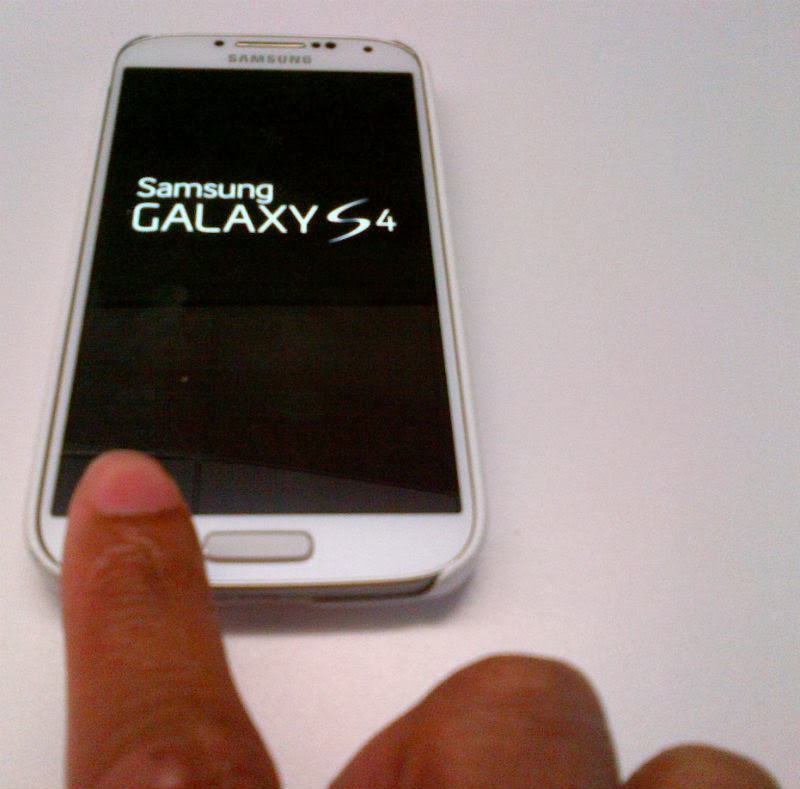
Most people realize they can boot into safe mode on a Windows box but did you know you can boot your Samsung Galaxy S4 into Safe Mode too?
Booting your Droid into Safe Mode loads the core operating system sans the crap. In other words, all superfluous apps and widgets won’t load which leaves only factory installed stuff. If your phone works fine in Safe Mode but quirky in Normal Mode then you have good reason to believe that uninstalling one or more apps will fix things.
If you’re noticing that your Galaxy S4 locks up often, the battery is draining faster than normal, or the phone takes too long to startup then booting to Safe Mode is perfect because it lets you uninstall aberrant apps and gets your phone back on track.
Booting the Samsung Galaxy S4 to Safe Mode
Hold down the power button for 2 seconds to bring up your phone options.
Confirm the power off operation…
Now as the phone boots up keep pressing the menu soft key which is immediately to the left of the Home Button.
You might feel silly tapping the bottom left side of your phone as it turns on because it won’t seem like anything is happening. That’s fine, just find the nearest vacant room, close the door and keep tapping your heart away until the Home Screen emerges.
Astute observers will immediately notice the monochrome Safe Mode insert along the bottom left edge of the screen
Log in the phone and flip through your home screens.
Only factory apps are available in Safe Mode so your phone might seem banal but it should feel more responsive.
Tap your way to Settings (tap the left menu key next to the Home button and choose Settings)
It’s hiding behind the Safe Mode screen stamp…
We want the Application Manager so touch the More tab and scroll down midway.
Start browsing through your Apps starting with the most recently installed. Unfortunately I couldn’t find an easy way to sort by install date so it looks like you can only sort alphabetically or by file size (tap the menu soft key again for those options).
When you find a potentially culpable App, tap it in the list and choose Uninstall.
Keep methodically going through each App and uninstalling one by one until you find the unruly App that’s flubbing up your phone. It’s a bit of a pain but I don’t see an easier way of doing this; however, if you’ve had better success please share your knowledge in the comments below.
Consider a Factory Reset
In more extreme cases you may want to consider a full factory reset. If you have voluminous apps and think it’ll take you more than half a day to uninstall them or if your phone has become virtually unusable it might make sense to restore your phone to the factory defaults.
This will nuke all your apps and settings so make sure you have critical items backed up first.
To start the Reset, revisit Settings and tap the Accounts tab.
Scroll to the very bottom and choose Backup and Reset. Note: If you’re in Safe Mode the word Backup is obstructed by the Safe Mode graphic in the bottom left corner of the screen.
It’s kind of hard to see the Backup and reset button but just touch and trust me – you’ll end up where you want to be.
Take a thoughtful pause… then press the Factory Data Reset button to zap your phone.
When you’re ready to get out of Safe Mode, just power down the phone normally and reboot. As your phone starts up, forget any fancy finger tapping and you’ll boot directly to normal mode.